eFoiling for beginners: what it feels like and what you need
A first-timer's guide to efoiling — no wind or waves needed — covering battery range, board choice, and that first silent lift-off.
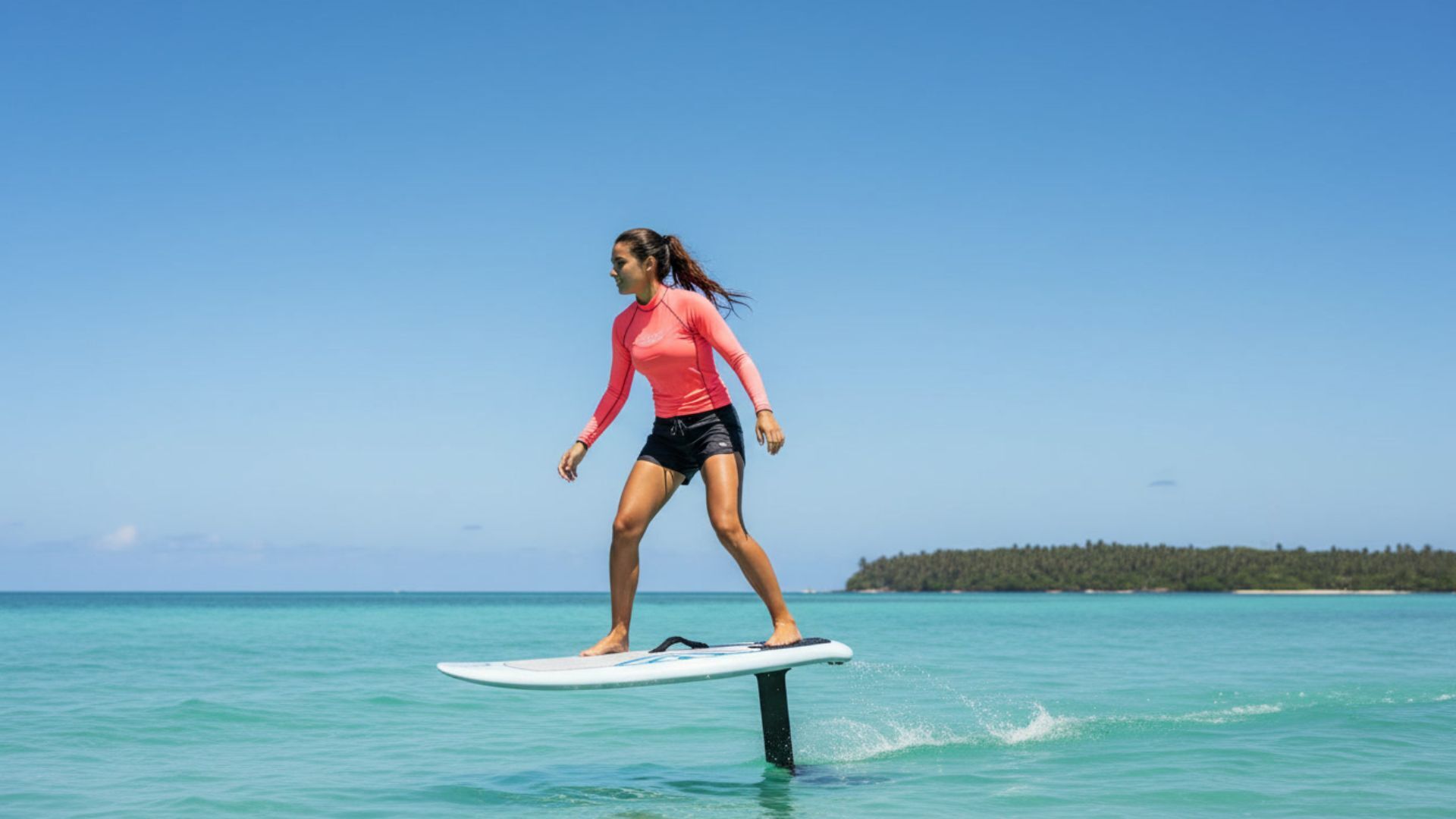
The first thing that surprised me about efoiling wasn't the lift-off. It was how quiet a car park next to a flat reservoir can be at 8am on a Tuesday, with no wind forecast, no swell, and absolutely no reason to be checking a conditions app at all. That's the whole point of an efoil: it makes its own conditions.
An efoil is, in essence, a surfboard with a mast and hydrofoil wing underneath, driven by a battery-powered propeller instead of wind or waves. You control speed with a handheld remote, the motor pushes water over the wing, and once you're going fast enough the wing generates lift and the board rises clear of the surface. No tide window, no gust forecast, no paddle-out. That's why it's become the go-to option for people who want to try foiling without first learning to wingfoil or kitesurf in choppy water.
What you actually need
Most lesson centres and rental operators supply everything: board, foil, battery pack, remote, wetsuit, and a helmet for your first sessions (you'll want it — more on that below). If you're renting privately or buying, the practical checklist is short but the numbers matter:
- Battery range: entry-level packs typically give 40–60 minutes of riding time, though that shrinks fast if you're accelerating hard or riding into a current. Budget for 20–25 usable minutes as a nervous beginner who's mostly cruising at low throttle, because fumbling with the remote burns charge inefficiently.
- Board size: beginner boards are wide and long — usually 130–160 litres of volume — for stability while you're learning to balance before the foil even engages. You'll graduate to something smaller and twitchier later, the same way a surfer moves off a soft-top.
- Foil size: bigger front wings (700cm² plus) lift at lower speed and feel more forgiving; this is what almost every beginner should start on regardless of what looks fast on Instagram.
- Water depth: you need at least 1.5–2 metres of clear water beneath you, since the mast alone can be 60–90cm long and you don't want to be clipping the bottom on your first wobble.
Unlike wind or kite sports, there's genuinely no seasonal calendar to plan around. A flooded quarry in December works as well as a bay in July, provided the water's warm enough for the wetsuit you've got — which is why efoiling has quietly become a winter activity in places that would otherwise be dead flat and unrideable for anything else.
What it actually feels like
Lying on the board holding the remote, your instructor will usually get you prone first — belly down, throttle held gently, just getting a feel for the motor's push before you try to stand. It's a strange sensation: the board accelerates smoothly rather than surging, more electric scooter than jet ski, and there's very little vibration once you're moving because the propeller is doing something closer to swimming than churning.
The kneeling stage is where most people spend their first ten minutes, and it's also where the range anxiety kicks in — you're burning battery on a skill you'll only use once. Don't rush it. Standing up too early just means falling off sooner and using up your session doing water starts instead of riding.
The lift-off itself, when it comes, is the bit everyone remembers. There's a speed — somewhere around 10–12 km/h depending on your weight and foil size — where the board stops slapping the surface and just goes silent and smooth underneath you. It's not a jolt. It's more like the moment a plane's wheels leave the tarmac: a small drop in noise, a change in how your legs are absorbing movement, and suddenly you're floating 20–40cm above the water on nothing but a strut and a wing. Most first-timers laugh out loud, which is a fairly reliable tell that they're now hooked.
The learning curve after that first flight is mostly about throttle control, not balance. Efoils are far more forgiving of body position than a kitesurf board on a wave, because the electric motor gives you constant, predictable thrust rather than the gusty, on-off power you get from wind. If you've read our kitesurfing beginner's guide you'll know how much of that sport's early frustration comes from unpredictable power delivery — efoiling removes that variable almost entirely, which is exactly why so many wing and kite instructors now use it to teach foil balance before their students ever touch a sail.
The trade-offs worth knowing before you book
It isn't all upside. Battery packs are heavy (often 8–12kg) and expensive to replace, servicing costs more than a windsurf sail ever will, and because there's no wind or wave dependency, the sport tends to attract more traffic on the same patch of flat water — so etiquette and space awareness matter even in a reservoir with nobody else around, because efoils move fast and quietly, and you won't hear one coming.
There's also the noise-and-wake question at some locations: several harbours and lakes now restrict efoiling hours or zones because a foil moving at 25km/h throws up more disturbance than it looks like from the beach. Always check local rules before you turn up with your own kit rather than assuming a rental centre's patch of water is open to everyone.
If you want to see how efoiling sits alongside the sports it borrows most from, the efoiling hub has the full breakdown of gear categories, typical lesson costs, and how conditions (or the lack of them) affect a session. For anyone who's tried it and is already eyeing up something that adds wind back into the equation, wingfoiling is the obvious next step — same lift-off feeling, considerably more variables to manage.
Either way, the first flat, windless, boring-looking bit of water you can find is probably the best place to start.
More stories
 Comparison
The best water-sports forecast apps in 2026
An honest, sport-by-sport look at the forecast apps worth your time — Surfline, Windy, Windguru, Windfinder and 4Shor — and which one fits how you ride.
 Field notes
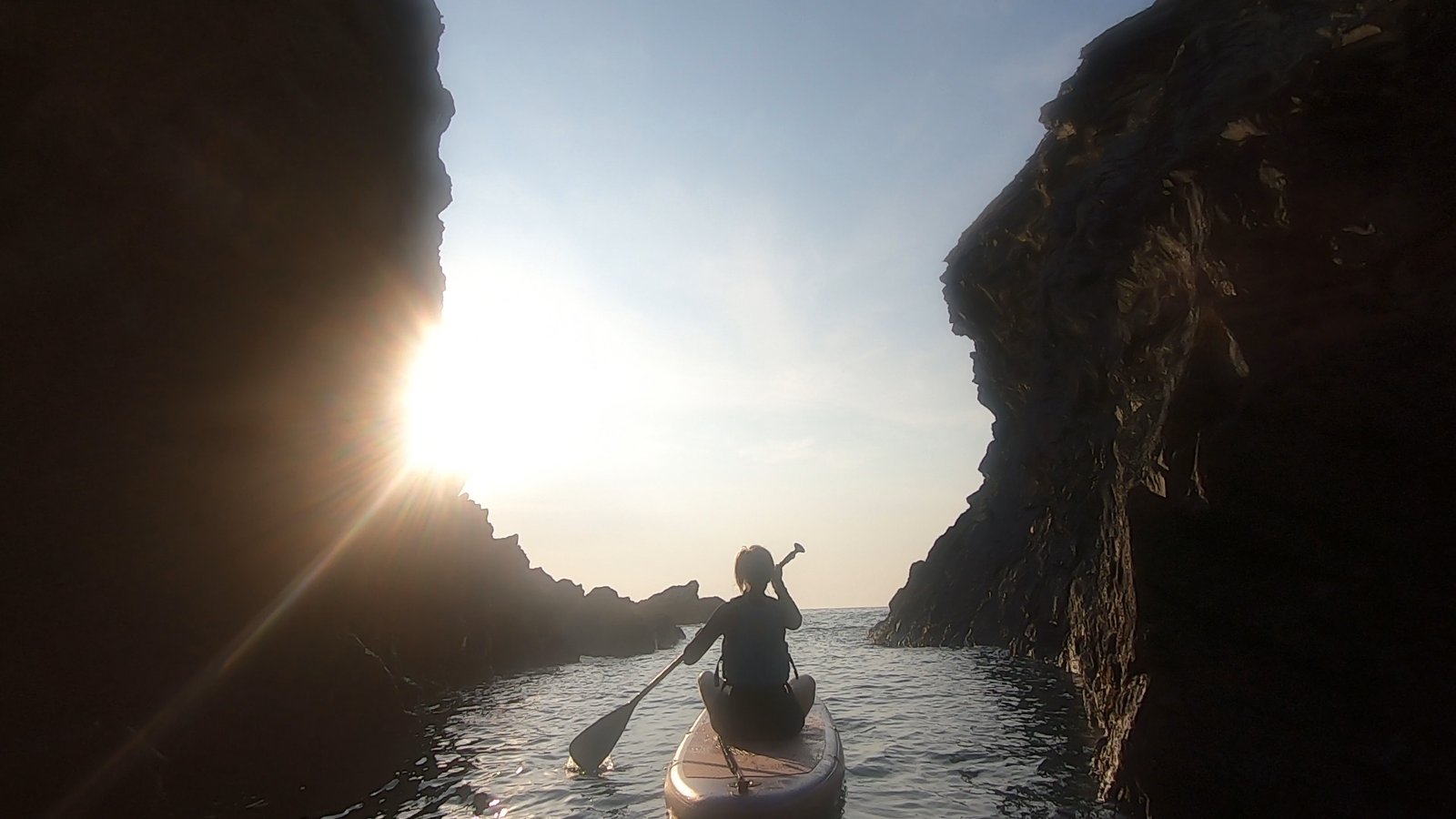
Paddleboarding into the Witches Cauldron, Pembrokeshire
Moving our Pembrokeshire trip to a calmer Friday evening so Sarah, new to paddleboarding, could SUP through the arch into the Witches Cauldron — and out at sunset.
 Field notes
Three days chasing wind in Tarifa
A first-person diary of a long weekend on the Strait of Gibraltar — reading Levante against Poniente, rigging up, and the session that made the trip.
Find your next session.
4Shor scores every spot for your sport and ability, up to 8 days ahead — so you always know when to go.