
Open water swimming for beginners: wetsuits, safety and your first cold dip
A practical, no-hype guide to starting open water swimming this UK season: wetsuit thickness, tow floats, cold shock and picking a safe first spot.
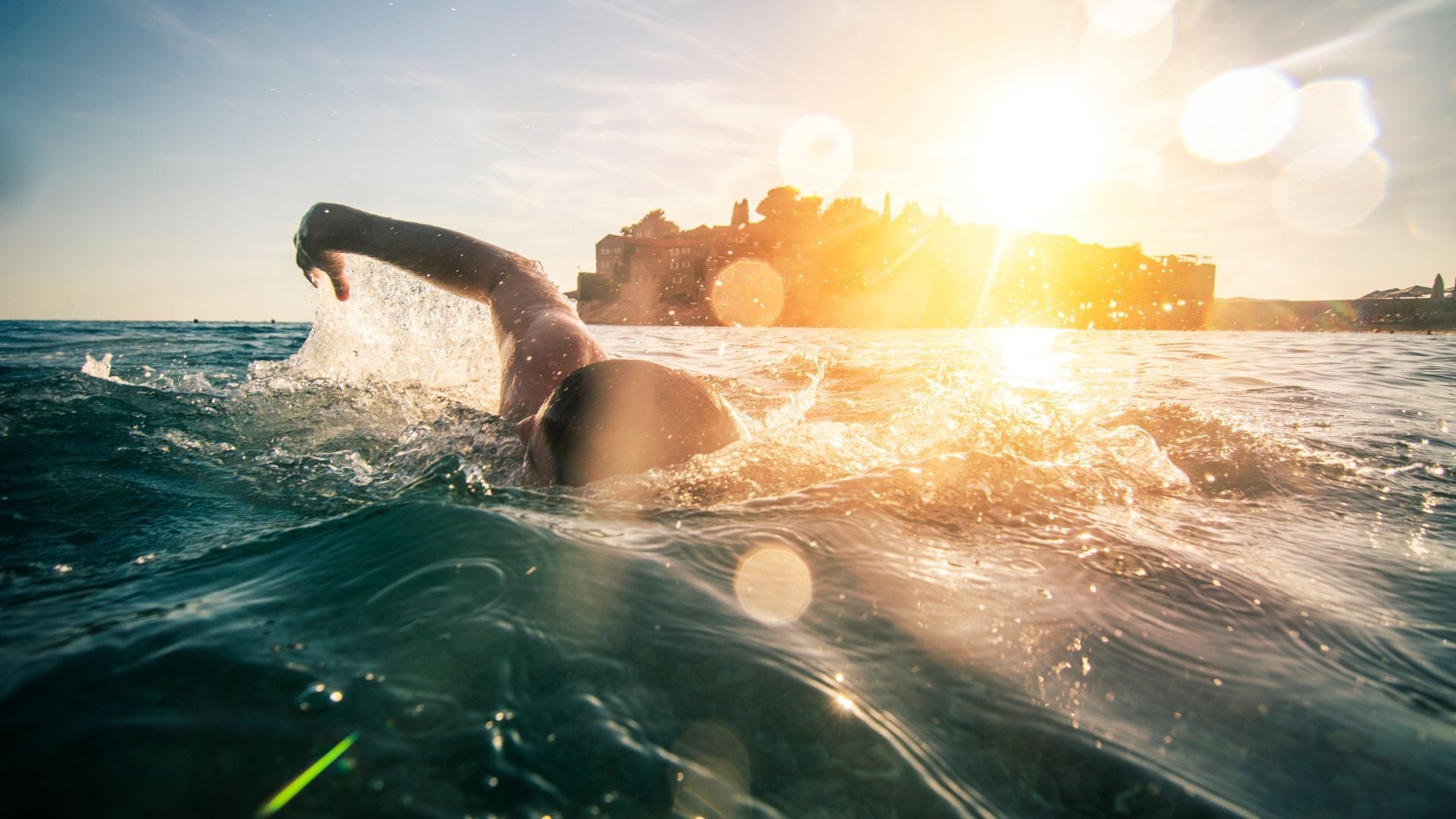
May is when the UK's open water swimming season properly wakes up. Lake permits reopen, lidos start running unheated sessions again, and the sea finally starts to feel like something other than a punishment. If you've been eyeing up your first proper open water swim, this is a genuinely good month to start — the water's still cold enough to demand respect, but it's warming, the days are long, and most venues have safety cover back in place after winter closures.
This isn't a fitness piece. It's the practical stuff: what to wear, what cold shock actually does to you, how to get in without panicking, and how to pick a first spot that won't punish a mistake.
Wetsuit thickness: don't overthink it, don't underdo it
For UK water in May, sea temperatures typically sit somewhere between 10-13°C depending on where you are — colder in the north and east, a touch milder in the southwest. At those temperatures a 5/3mm or 5/4mm open water wetsuit (thicker on the torso, thinner at the shoulders for stroke movement) is the sensible default. Triathlon-style suits with buoyancy panels are fine and actually help beginners by keeping your legs up, which makes the whole experience less like hard work.
What trips people up is going too thin because a suit "felt fine" in a shop or on a warm day. Cold water saps heat fast, and a suit that's marginal on temperature will only become a problem twenty minutes in, once you're tired and further from shore than you meant to be. Neoprene boots, gloves and a hood aren't vanity gear at this time of year — extremities lose heat disproportionately, and cold hands make it hard to grip a tow float or undo a wetsuit zip afterwards, which matters more than it sounds.
Cold shock is the real beginner hazard
The biggest risk in early-season open water swimming isn't drowning from exhaustion, it's cold water shock — the gasp reflex, the spike in heart rate and blood pressure that hits in the first 30-90 seconds of immersion. It's involuntary, and it's the reason people who are otherwise strong swimmers get into trouble close to shore in cold water.
The fix is acclimatisation, not bravado. Get in slowly, wet your face, neck and wrists before you commit your chest, and give yourself a good minute of controlled breathing before you try to swim properly. Your first few sessions of the season should be short — five to ten minutes is a completely legitimate swim when the water's under 13°C — and focused entirely on getting comfortable with the sensation, not on distance or pace. Build up gradually over successive sessions rather than trying to hit last September's distances on day one; your body has lost a lot of its cold tolerance over winter even if your fitness hasn't dropped.
Tow floats aren't optional
A tow float — the inflatable bag on a waist leash that trails behind you — does three jobs: it makes you visible to boats and other water users, it gives you something to hang onto and rest against if you get tired or cramp up, and in a lot of cases it's simply the entry ticket for organised sessions and clubs, who won't let you in the water without one. Buy one before you buy anything else on this list. It's the cheapest, highest-value piece of kit in this entire sport.
Picking your first spot
A sheltered lake, quarry or estuary with a shallow, gently shelving entry beats an open beach for a first swim, every time. You want somewhere with little to no current, other people around (ideally a supervised venue or an established open water group), and an easy, unhurried way back to shore if you change your mind halfway across. Purpose-run open water venues are worth seeking out for exactly this reason — they're risk-assessed, they usually have safety cover on the bank, and the water's roughly the same temperature everywhere in the venue, which sea swims can't promise once you cross a thermocline or a river mouth.
If you're set on the sea, go on a calm, low-wind day, swim parallel to the shore rather than straight out, and always tell someone what you're doing and roughly how long you'll be. Check the forecast for wind and swell the way you would before any water session — the same conditions data that tells paddleboarding paddlers whether it's a flat, easy morning is just as useful for judging whether a swim spot will be glassy or genuinely rough.
The broader swimming hub is worth bookmarking as the season goes on — it's useful for tracking how local water temperatures are trending as spring turns into summer, which matters more for planning your wetsuit thickness than any single day's air temperature does. And if cold UK water isn't quite your idea of a good time yet, it's worth reading about warmer alternatives — the write-up on Algarve mornings mixing SUP, swim and surf is a decent look at what open water swimming feels like once you don't need a hood and gloves to do it.
Either way, the principle's the same wherever you swim: short first, comfortable second, ambitious third. Get those in the right order and open water swimming turns from a shock into one of the better reasons to get up early this summer.
More stories
 Comparison
The best water-sports forecast apps in 2026
An honest, sport-by-sport look at the forecast apps worth your time — Surfline, Windy, Windguru, Windfinder and 4Shor — and which one fits how you ride.
 Field notes
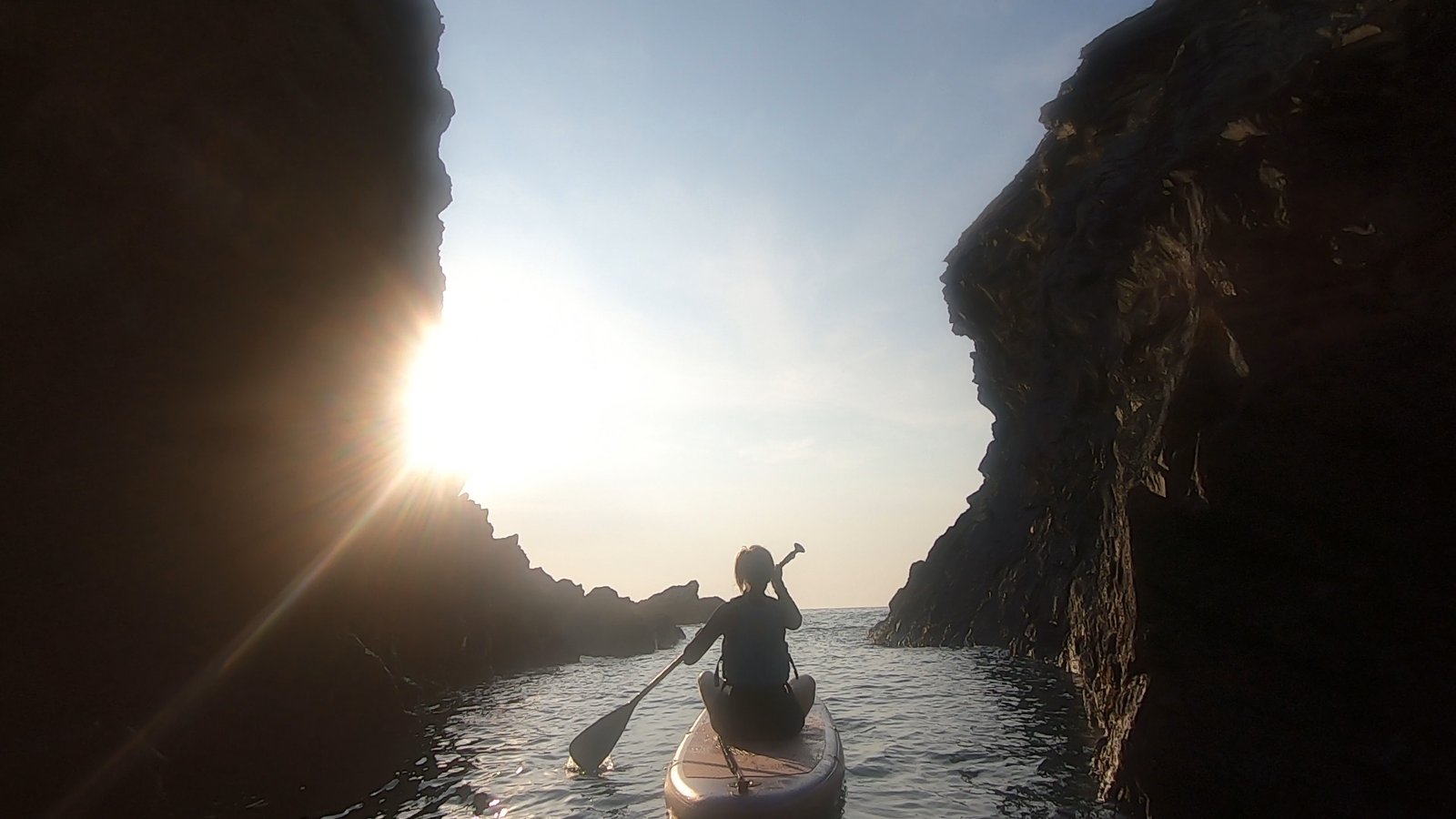
Paddleboarding into the Witches Cauldron, Pembrokeshire
Moving our Pembrokeshire trip to a calmer Friday evening so Sarah, new to paddleboarding, could SUP through the arch into the Witches Cauldron — and out at sunset.
 Field notes
Three days chasing wind in Tarifa
A first-person diary of a long weekend on the Strait of Gibraltar — reading Levante against Poniente, rigging up, and the session that made the trip.
Find your next session.
4Shor scores every spot for your sport and ability, up to 8 days ahead — so you always know when to go.