Reading the wind for kite & wing: strength, direction and gusts
Wind speed is only half the story. Here is how to read direction, gust factor and squalls so you rig the right kite or wing every time.
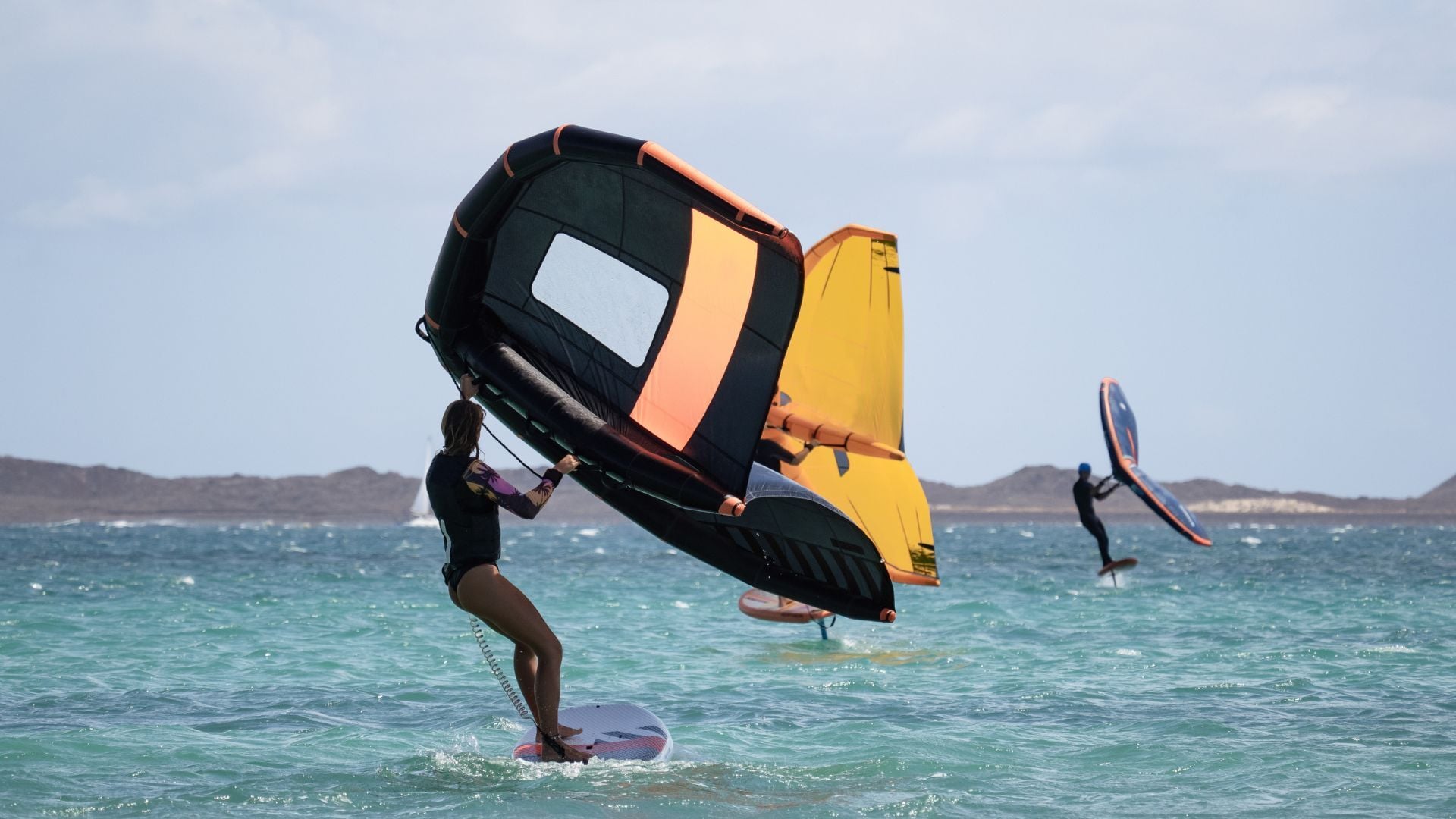
For kitesurfers and wing foilers, wind is everything — but the single average speed most apps lead with hides the details that actually decide your session. Direction, gust factor and the shape of the day matter just as much as the number. Here's how to read a wind forecast like someone who's about to rig up.
Speed: pick the right kite or wing
Wind speed, usually in knots, tells you what size gear to grab. It's personal — it depends on your weight, board and skill — but as a rough guide most riders are looking for a workable window of roughly 15–30 knots. Below ~12 knots you need big kites, foils or a lot of skill; above ~35 knots it's expert, small-gear territory.
The key skill is matching the forecast to your quiver: light day, big kite; strong day, small kite. Getting this wrong is how you end up overpowered and out of control, or underpowered and swimming.
Direction: the difference between epic and dangerous
Wind direction relative to the beach is a safety issue before it's a quality one:
- Cross-shore / cross-onshore — ideal. You ride back and forth along the beach and drift towards shore, not out to sea.
- Onshore — safe but harder to hold upwind; can pile up chop on the beach.
- Offshore — dangerous. It blows you away from land and the wind is usually gusty and unreliable near the shore. Avoid unless you're experienced and there's reliable safety cover.
Gust factor: the number nobody quotes
A forecast of "20 knots" feels very different depending on whether the gusts hit 24 or 38. The spread between the lull and the gust — the gust factor — determines how smooth and controllable the session is.
- Steady wind (small gap between average and gust) is easy, predictable and the best for learning and foiling.
- Gusty wind (big gap) yanks you around, makes powering the foil inconsistent, and is where a lot of crashes and scares come from.
Steady wind usually comes from a clean, established airflow over open water; gusty wind often means it's blowing over land first, or a front is nearby.
Read the shape of the day
Thermal winds — like Mediterranean sea breezes — build predictably through the afternoon and drop at dusk, so timing matters. Frontal winds can arrive with violent squalls: a sudden dark cloud line can double the wind in minutes. Always look at how the wind evolves across the hours, not just the peak, and keep an eye on the sky once you're on the water.
Let 4Shor weigh it all up
Speed, direction, consistency, how it changes hour by hour — that's a lot to juggle for every spot. 4Shor folds it into one score per spot for kitesurfing, wing foiling and windsurfing, tuned to your ability, so a high score means genuinely rideable wind — the right strength, the right direction, and steady enough to enjoy.
New to it? Start with kitesurfing for beginners.
More stories
 Comparison
The best water-sports forecast apps in 2026
An honest, sport-by-sport look at the forecast apps worth your time — Surfline, Windy, Windguru, Windfinder and 4Shor — and which one fits how you ride.
 Field notes
Paddleboarding into the Witches Cauldron, Pembrokeshire
Moving our Pembrokeshire trip to a calmer Friday evening so Sarah, new to paddleboarding, could SUP through the arch into the Witches Cauldron — and out at sunset.
 Field notes
Three days chasing wind in Tarifa
A first-person diary of a long weekend on the Strait of Gibraltar — reading Levante against Poniente, rigging up, and the session that made the trip.
Find your next session.
4Shor scores every spot for your sport and ability, up to 8 days ahead — so you always know when to go.